
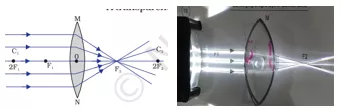
Class 10 light reflection and refraction notes help students understand how light behaves when it meets different surfaces and mediums. Lucky Industries has created high-quality instructional science kits that assist students studying for the CBSE, ICSE and other State Board examinations in attaining complete understanding of these topics through practical experiences. If you are looking for School or Institutional Lab Kits , please contact Lucky Industries at +91 9030919029 .
The first concept in class 10 light reflection and refraction is that light is energy that allows us to see everything around us. Light travels in straight lines and follows certain rules when it strikes an object or interacts with a substance (medium). Lucky Industries has developed experiments so that students can experiment with these rules using science kits.
In a vacuum, light travels at an incredible velocity of 3 x 10⁸ m/s, and the velocity of light will continue to decrease as it travels through air, water, and glass. When light changes speed, many optical phenomena occur, such as distortions, reflections, and bends in the path of light.
According to the Class 10 notes, light reflection/refracting is when light bounces off of a glossy surface creating the appearance of an object through the process of reflection. Most often when the shiny surface is a mirror, there is a perfect mirror image for viewing. The company Lucky Industry sells school grade mirrors as well as equipment that allows students to experiment with the reflection process.
Reflection allows us to observe and understand what we are viewing through the use of mirrors, helps driver know where they are going via the use of back view mirrors and creates instruments such as periscopes, kaleidoscopes, etc.
Class 10 light reflection and refraction notes include the two important laws of reflection every student must learn:
These laws hold true for all reflective surfaces—smooth or rough.
1. Regular Reflection
Class 10 light reflection and refraction notes describe regular reflection as the reflection that occurs on a smooth and polished surface. The reflected rays remain parallel, and the image appears clear.
This type of reflection is shown in mirrors and shiny metals.
2. Diffused Reflection
Class 10 light reflection and refraction notes also include diffused reflection, which happens on rough surfaces. Here, the reflected rays scatter in different directions, making the image unclear. Examples: walls, paper, road surfaces.
Plane Mirrors
Class 10 light reflection and refraction notes explain that plane mirrors form an image that is:
Lucky Industries’ lab kits include plane mirrors with measurement scales to help students observe lateral inversion effectively.
Spherical Mirrors
Class 10 light reflection and refraction notes also include spherical mirrors—curved mirrors used in torches, headlights, solar cookers, and reflectors.
There are two types:
1. Concave Mirror
Class 10 light reflection and refraction notes state that concave mirrors curve inward like a cave. They can form real or virtual images.
Important uses:
2. Convex Mirror
Class 10 light reflection and refraction notes note that convex mirrors bulge outward and always form virtual, erect, and diminished images. Use: rear-view mirrors in vehicles.
Class 10 light reflection and refraction notes clarify essential terms:
The relationship f = R/2 is a standard concept in Class 10 optics.
Class 10 light reflection and refraction notes describe image formation based on object position:
Lucky Industries’ mirror stand kits allow students to perform each case in science labs.
Class 10 light reflection and refraction notes include the mirror formula:
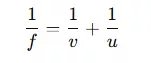
Where:
Students must follow sign conventions to solve numerical problems.
Class 10 light reflection and refraction notes define refraction as the bending of light when it travels from one transparent medium to another. This bending happens because light changes its speed.
Examples:
Lucky Industries offers high-clarity glass slabs and lenses for hands-on learning.
Class 10 light reflection and refraction notes include two laws:
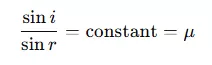
This constant (µ) is the refractive index.
Class 10 light reflection and refraction notes describe refractive index as a measure of how much a medium slows down light.
Water < Glass < Diamond
The higher the refractive index, the slower light moves.
Class 10 light reflection and refraction notes explain that when a ray enters a glass slab, it bends towards the normal and bends away when it comes out. The emergent ray runs parallel to the incident ray but gets shifted sideways.
This shift is known as lateral displacement.
Lucky Industries includes rectangular glass slabs and pins to perform this experiment safely.
Convex Lens
Class 10 light reflection and refraction notes describe convex lenses as thicker at the middle and thinner at the edges. They converge light.
Uses:
Concave Lens
Class 10 light reflection and refraction notes define concave lenses as thinner in the middle and thicker at the edges. They diverge light.
Uses:
Class 10 light reflection and refraction notes include:
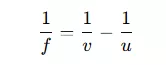
And the Magnification Formula
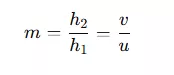
Where:
Class 10 light reflection and refraction notes explain power as the ability of a lens to converge or diverge light.
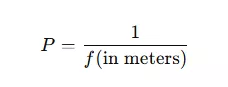
Unit: Dioptre (D)
Class 10 light reflection and refraction notes show that these principles are used in:
Lucky Industries manufactures ready-to-use science kits for all these topics.
Experiment 1: Reflection Using a Plane Mirror
Class 10 light reflection and refraction notes include a simple experiment where students observe angles and image formation using a plane mirror and pins.
Experiment 2: Reflection by Spherical Mirrors
Class 10 light reflection and refraction notes describe tracing ray diagrams with a concave or convex mirror.
Experiment 3: Refraction Through Glass Slab
Class 10 light reflection and refraction notes guide students to observe lateral displacement.
Experiment 4: Image Formation by Lens
Class 10 light reflection and refraction notes train students to find focal length using sunlight and a convex lens.
Lucky Industries supplies all required apparatus for schools.
Class 10 light reflection and refraction notes help students understand the behavior of light, image formation, and basic optical tools. Lucky Industries supports schools, teachers, and students with premium lab kits and educational tools. For CBSE, ICSE, and State Board science equipment, call Lucky Industries – +91 9030919029 .
Reflection is the bouncing back of light from a surface.
Refraction is the bending of light when it travels from one medium to another.
Lateral inversion is the left-right reversal in plane mirror images.
Focal length is the distance between the pole and focus of a mirror or lens.
Refractive index shows how much a medium slows down light.
Snell’s law relates the angle of incidence and refraction through a constant ratio.
Power of a lens tells how strongly it converges or diverges light.
Lateral displacement is the sideways shift of the emergent ray through a glass slab.
Magnification is the ratio of image height to object height.
Real images form on a screen, while virtual images do not.