
Reflection and Refraction of Light form the foundation of many optical experiments taught in CBSE , ICSE and State Board schools, and Lucky Industries proudly provides high-quality, affordable science lab kits at the best cost and price for schools and students. Understanding these concepts helps learners explore how light behaves in everyday life, from mirrors to lenses, from eyeglasses to telescopes, and even in advanced scientific applications. As a company offering reliable science lab kits near you, Lucky Industries ensures that every student gains hands-on clarity about these essential physics topics.
This chapter introduces the science behind light rays, their behavior, the rules that guide them, and the experiments students perform in laboratories using precise Lucky Industries lab kits. With over 20 years of expertise in supporting school science education, we understand how to present these topics in the simplest form without losing depth.
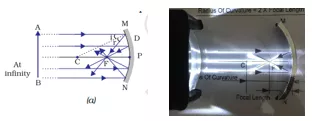
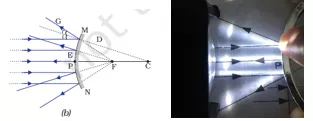
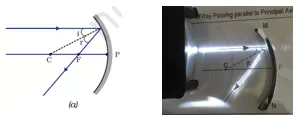
Reflection and Refraction of Light explain two major behaviors of light when it interacts with different surfaces. Light always travels in a straight line, but when it meets an object or enters another medium, it changes direction. These two changes are known as reflection and refraction.
Students across CBSE, ICSE, and State Boards learn these topics because they form the core of optics. Everything from seeing yourself in a mirror, reading with spectacles, watching a rainbow, or understanding how cameras work—all relate to these two principles. Lucky Industries develops school lab kits at an affordable cost to ensure schools and students clearly understand these concepts through proper experimentation.
To make this lesson easy and practical, this content explains definitions, laws, formulas, diagrams (description-based), and applications that help students score well in exams and perform confidently in science labs.
Reflection and Refraction of Light begin with understanding reflection because it is the simplest interaction of light. Reflection of light is the process in which light rays bounce back into the same medium after striking a smooth surface such as a mirror.
Every time you look into a mirror, see sunlight bounce off a wall, or observe objects around you, reflection is at work. Lucky Industries science lab kits include high-quality mirrors, pins, and protractors to help students perform reflection experiments without any extra charge.
1. Regular Reflection
Regular reflection takes place when light falls on a smooth, polished surface like a plane mirror. In this case, the reflected rays remain parallel, producing a clear image.
Examples:
2. Irregular Reflection
Irregular reflection happens on rough surfaces where the reflected rays scatter in different directions. This does not form a clear image.
Examples:
Lucky Industries ensures that our lab kits contain surfaces for both types of reflection so students observe the difference clearly during science experiments.
Reflection and Refraction of Light follow certain scientific laws. The laws of reflection state:
These laws apply to all types of reflecting surfaces, whether smooth or rough.
Before exploring reflection and refraction, students must understand that light is a form of energy that travels in a straight line. It behaves like a wave as well as a particle (dual nature). In Class 10, we mainly study its ray nature.
Important facts:
When students perform lab experiments with mirrors from Lucky Industries kits, they observe important mirror properties:
These properties help students understand how plane mirrors behave in daily life.
Reflection and Refraction of Light – What is Refraction?
Reflection and Refraction of Light become more interesting when students understand refraction, which explains the bending of light. Refraction is the change in direction of a light ray when it passes from one medium to another medium of different optical densities.
For example:
Lucky Industries provides student-friendly lens sets at a reasonable price so schools and students can perform refraction experiments without difficulty.
Refraction happens because light travels at different speeds in different media.
Speed of light is:
This change in speed causes the bending of light rays.
Reflection and Refraction of Light follow scientific laws, and refraction has two rules called Snell’s Law:
This constant is known as the refractive index (n).
Snell’s Law Formula:
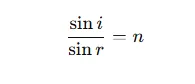
sin r/sin i=n
Where:
i = angle of incidence
r = angle of refraction
n = refractive index
The refractive index of a medium is also calculated by:
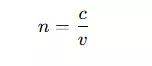
n=c/v
Where:
c = speed of light in air
v = speed of light in the medium
Lucky Industries provides quality glass slabs and lenses with accurate refractive index values, making experiments easy to understand.
Students commonly perform the glass slab experiment, included in Lucky Industries lab kits.
When light enters a glass slab:
This creates a lateral shift, showing how light moves inside transparent objects.
Types of Lenses
Reflection and Refraction of Light experiments include two major types of lenses:
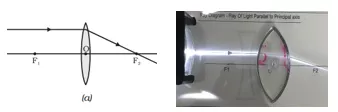
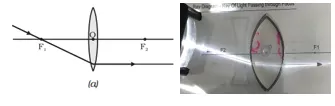
1. Convex Lens (Converging Lens)
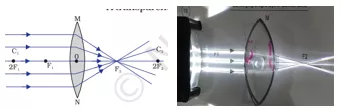
Bulges outward, converges light rays at a point called focus.
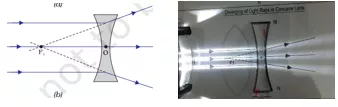
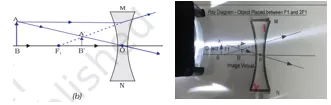
2. Concave Lens (Diverging Lens)
Curves inward, spreads out light rays.
Lucky Industries lens kits include both lenses at low cost and suitable for CBSE and ICSE practical exams.
Lens Formula
The relationship between object distance (u), image distance (v) and focal length (f) is:
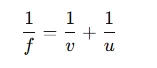
1/f=1/v+1/u
Magnification Formula
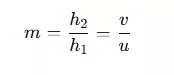
m=h2/h1=v/u
Where:
h₂ = height of image
h₁ = height of object
Reflection and Refraction of Light play a major role in modern life:
Lucky Industries creates advanced school lab kits so students observe these applications during hands-on learning.
Lucky Industries provides complete kits for the most important CBSE/ICSE/State experiments:
1. Reflection Using a Plane Mirror
2. Refraction Through a Glass Slab
3. Refraction Through a Convex Lens
4. Refraction Through a Concave Lens
All kits are available at an affordable cost and price, and schools can book them near me by contacting Lucky Industries at +91 9030919029 .
Students must follow basic lab safety rules:
Lucky Industries provides fully safe, student-friendly lab kits designed for school use.
Contact: +91 9030919029
Conclusion
Reflection and Refraction of Light help students understand the fundamental behavior of light in nature and technology. These concepts explain how mirrors form images, how lenses correct eyesight, how cameras capture photos, and how scientific instruments work. By learning these principles through practical experiments, students build strong conceptual clarity.
Lucky Industries supports schools and students by offering precise, durable, and affordable science lab kits near me at reasonable cost, price, and zero hidden charges. With our 20 years of experience and commitment to quality, we ensure every learner receives the best lab experience. For high-quality lab kits, contact Lucky Industries – +91 9030919029 .